TBD Health
Product engineering
One platform. Every side of care.
Sole frontend ownership across tbd.health, patient and clinician portals, and the Strapi CMS—from design and API integration through testing, release, AWS operations, and maintenance.
A closer reading / Patient registration
Two ways into
the same form.
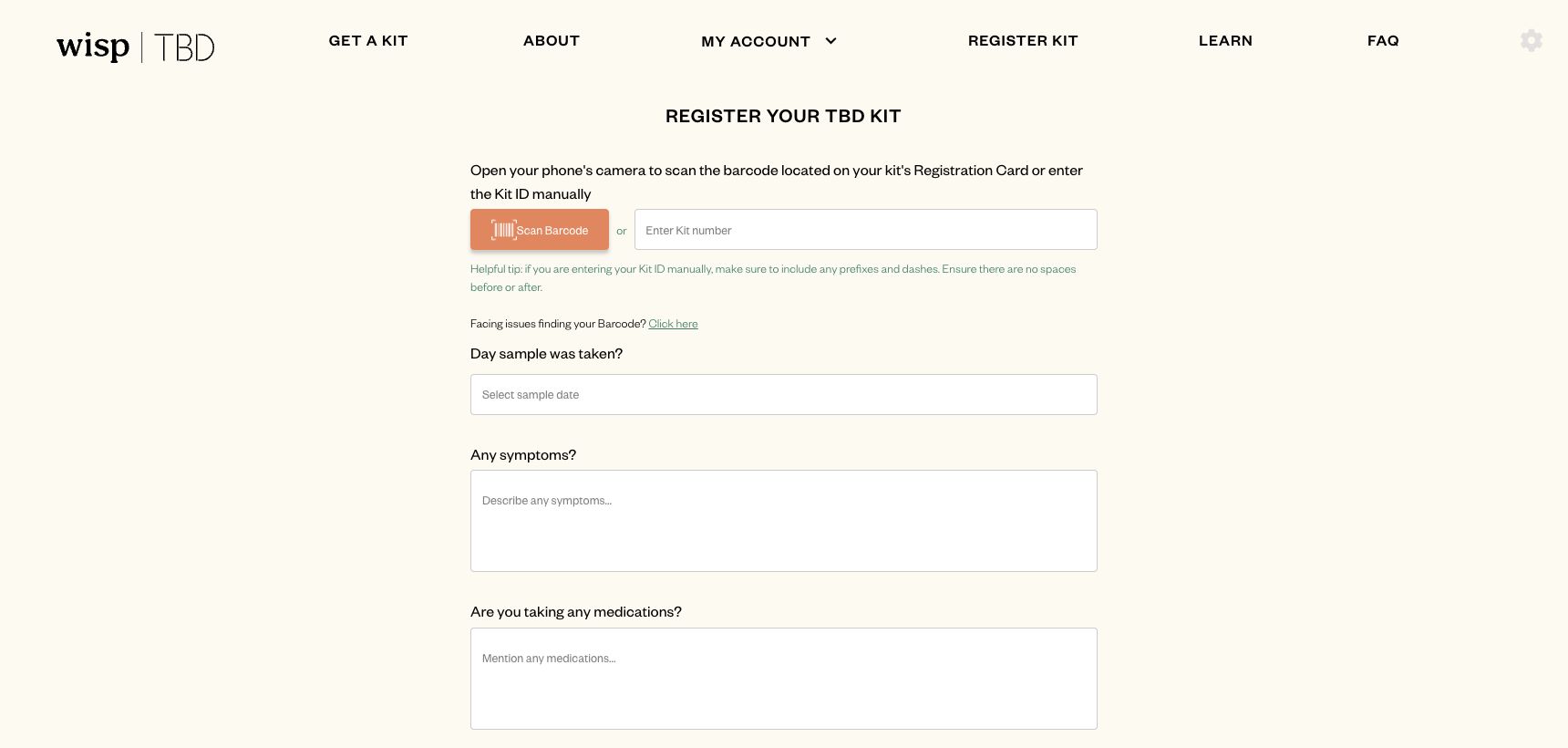
The form asks for a kit identifier alongside sample details. The captured interface keeps both camera scanning and manual entry visible at that point.
- 01 / Optional input
Use the camera.
The Scan Barcode control offers a phone-camera route to kit identification.
- 02 / Visible alternative
Keep manual entry beside it.
An “or” leads directly to the kit-number field. A person can see an alternative without first encountering a camera failure.
- 03 / Identifier guidance
Explain the exact input.
The helper text asks for prefixes and dashes to be retained, with no spaces before or after the identifier. Barcode-finding help follows below.
What the artifact establishes. Two input routes, formatting guidance and sample fields coexist in the captured form. That is an inspectable interface choice, not evidence that a registration completed or a recovery rate improved.
I owned the frontend alongside backend engineers and the CTO. This later capture does not establish the original implementation, decision history or which behavior changed after the handoff.
Field notes / The decision layer03 perspectivesBehindthe decisions.The work you see.
The thinking underneath.
One domain. Four surfaces.
Look beyond an individual screen: public commerce, patient and clinician portals, and content tools belonged to the same frontend responsibility.
01ScopeBuild across the ecosystem
Read noteClose note
 Inspect the original pixelsView full size
The context
A commerce change belonged to an ecosystem with different users: public visitors, patients, clinicians and the content team.
The approach
I carried frontend responsibility across all four surfaces, from design and existing API integration through testing, release and maintenance. That kept checkout and booking in the context of the wider care journeys.
The result in the record
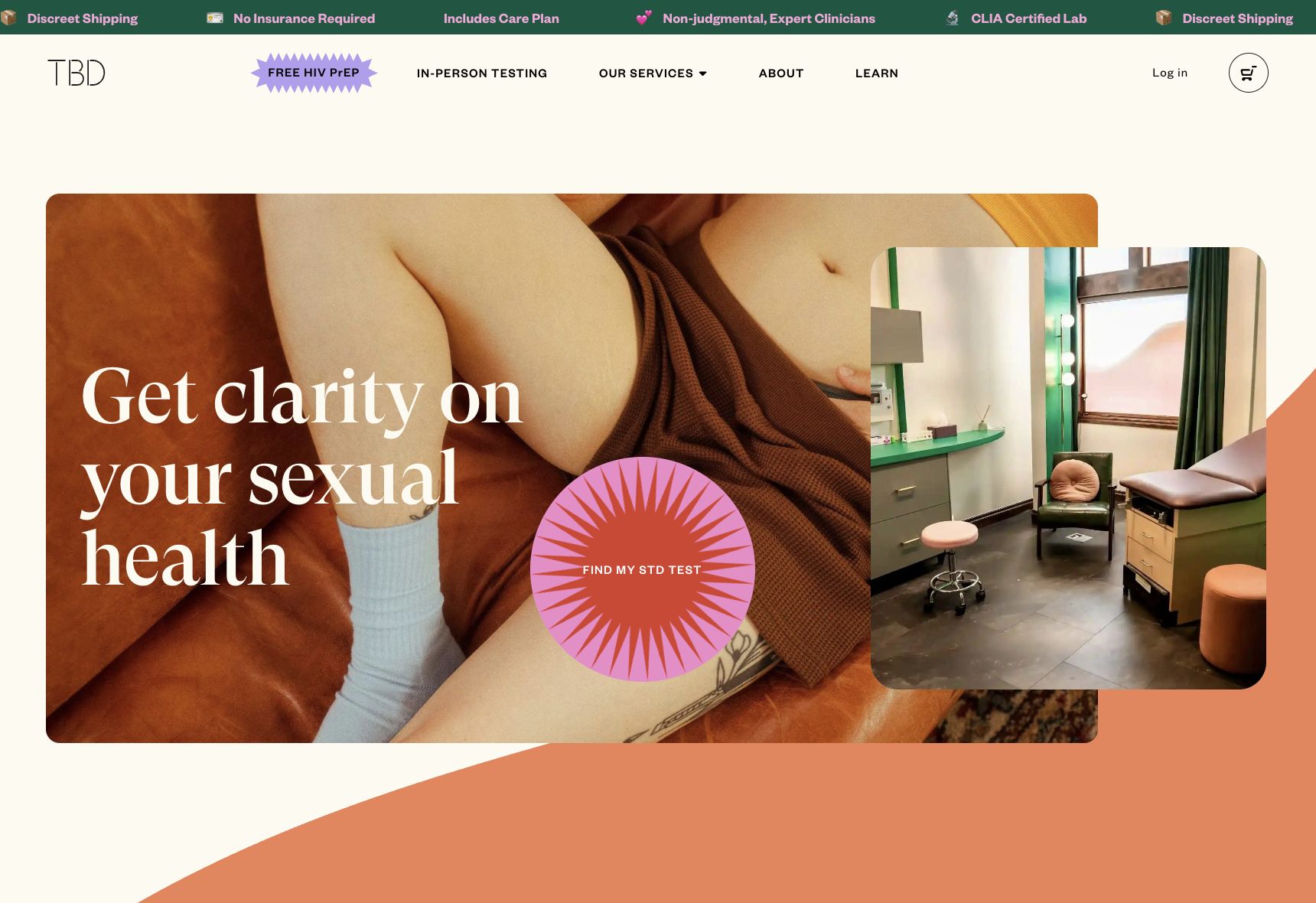
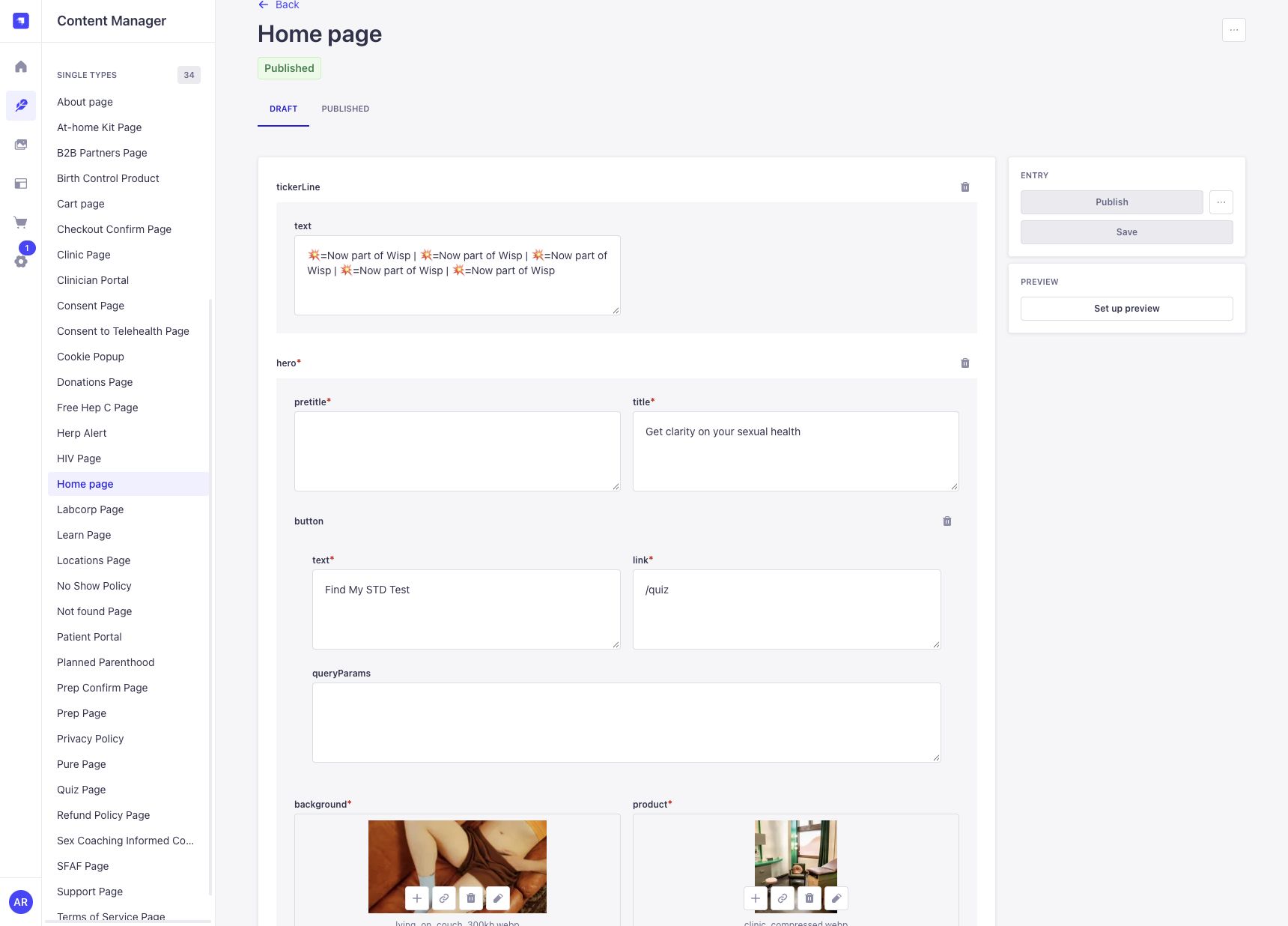
The public homepage is one visible entry point. The patient registration interface, clinician empty states and Strapi editor below make the other three surfaces inspectable, with their different capture dates retained.
02IntegrationMake the workflow work
Read noteClose note
 Inspect the original pixelsView full size
The context
A registration screen needed to collect information and connect it to a kit, alongside consent, appointments, results and messaging elsewhere in the platform.
The approach
I translated designs into responsive interfaces and integrated the existing APIs. Journey checks with Playwright and Cucumber and production investigation with Sentry were part of that delivery responsibility.
The result in the record
The captured registration form shows barcode scanning alongside manual kit entry, then sample date, symptoms and medication fields. It makes the difference between a page layout and a connected workflow concrete.
03StewardshipCarry the knowledge forward
Read noteClose note
 Inspect the original pixelsView full size
The context
The Wisp transition needed the product’s routes, behavior and operating knowledge to travel with the frontend code.
The approach
I continued as frontend domain owner from January to July 2026. The handoff included architecture, product behavior, integrations, deployments and operating procedures, alongside route preservation and login handoff.
The result in the record
The documented responsibility extends through the handoff rather than stopping at a release. The later Strapi capture shows a content editor within that domain; it is supporting interface evidence, not a before-and-after migration result.
Website: restored January 2026 archive. Portal and CMS interfaces: October 2026 captures.
Responsibility & practice
My contribution
- Role
- Sole Frontend Engineer (Contract) at TBD Health; frontend domain owner through the Wisp transition
- Period
- TBD Health: November 2022–January 2026 · Wisp: January–July 2026
- Tools & practice
- React · Next.js · TypeScript · Strapi · REST APIs · AWS · Playwright · Cucumber · Sentry
The scope was the ecosystem
The public commerce site was only one part of the frontend domain. Patients and clinicians had their own portals, while the team used Strapi to manage content. Changes needed to fit those connected surfaces and the APIs behind them.
My role covered frontend architecture, implementation, testing, release, and ongoing maintenance. I worked alongside backend engineers and the CTO. I usually received Figma designs and sometimes designed interfaces myself; responsibility continued after the interface reached production.
From an interface to a working journey
Commerce, checkout, payments, and clinic booking were examples inside a broader product. Patient and clinician workflows also connected messaging, appointments, results, prescriptions, registration, and consent with the platform’s services.
The registration capture makes that concrete: barcode scanning and manual kit entry lead into sample date, symptoms and medication fields. It shows the information a journey needs, while the empty-state clinician crops show another side of the same platform. These are later interface captures, not completed patient records.
My frontend responsibility was translating designs into responsive interfaces, integrating existing APIs and supporting production behavior. Backend engineers and the CTO remained collaborators and owners of the services behind those interfaces.
Delivery includes the work after release
Testing and observability were part of delivery: Playwright and Cucumber supported end-to-end verification, while Sentry supported production issue investigation. Routine AWS work involved services including DynamoDB, Cognito, Amplify, and Secrets Manager.
The engineering work included Next.js and React upgrades, a Strapi 4-to-5 migration, and moving the CMS database from SQLite to PostgreSQL. The constraint was continuity: existing product behavior and content workflows had to survive those platform changes. I paired the migrations with end-to-end checks and production issue investigation. The shared evidence includes the Strapi homepage editor and the interfaces those workflows supported; it does not establish a measured performance gain.
Commerce work included saved-card checkout and payment-failure recovery. Handling a failed attempt was part of the journey: the interface needed to keep the next step clear rather than treating the payment request as the end of the work.
A transition that could be handed over
My TBD Health role ran from November 2022 to January 2026. I then continued as frontend domain owner during the Wisp transition until July 2026, under the Senior Frontend Engineer (Contract) role recorded in my résumé.
That chapter included documenting system architecture, product behavior, deployments, integrations, and operating procedures, as well as route preservation and login handoff. A product is easier to inherit when its behavior and operational knowledge travel with its code.
What can be shared
This case brings together a January 2026 public website restoration and selected portal and CMS interfaces captured in October 2026. Clinician views use three empty-state crops; personal information is excluded. The cinematic building illustrates the four connected surfaces. My résumé records the employment dates and role.
Source material & further reading