Khajuraho Expo
Interactive browser experience
A place becomes an experience.
Design and frontend engineering with Haspr for a browser tour created with the Archaeological Survey of India (ASI), combining fieldwork, panoramic exploration, multilingual storytelling, and supported mobile gyroscope navigation.
Field notes / The decision layer03 perspectivesBehindthe decisions.The work you see.
The thinking underneath.
Find your way into a place.
Fieldwork became material for a browser tour. Map, panorama, language and supported device movement offered different ways into the same place.
01OrientationStart with a sense of place
Read noteClose note
 Inspect the original pixelsView full size
The context
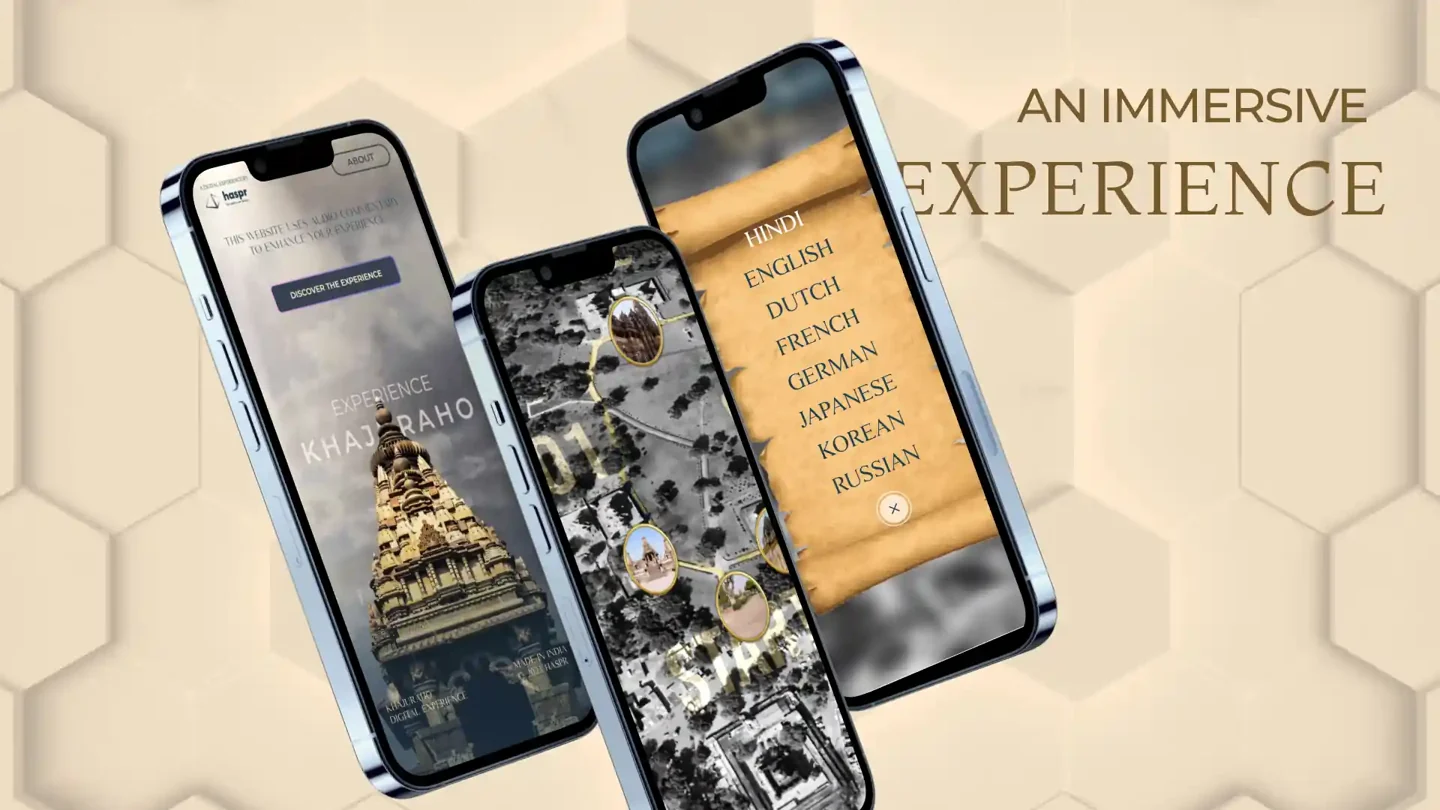
Architectural scale and intricate detail needed more context than a collection of photographs could provide.
The approach
The team visited the temples, photographed and filmed the structures, and gathered context. The browser tour paired a map overview with panoramic exploration. My contribution was design and frontend engineering with the team.
The result in the record
The original project artwork shows a map beside the tour entry and language choice. Temple thumbnails give the map recognizable destinations and connect the overview to the places visitors can explore.
02ExplorationLet the viewpoint respond
Read noteClose note
 Inspect the original pixelsView full size
The context
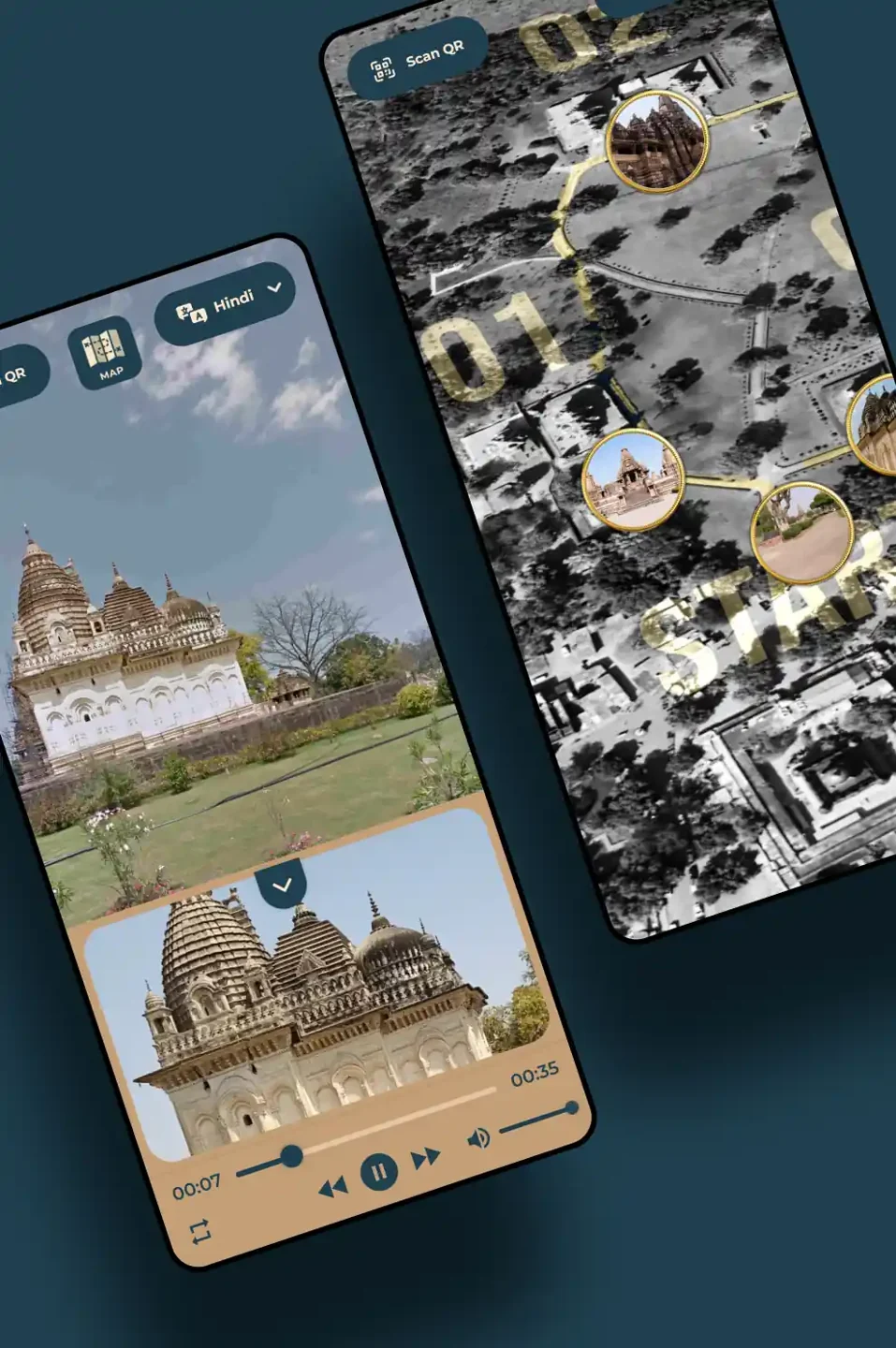
Visitors needed both a sense of the whole temple complex and a viewpoint inside it. Supported phones also offered device movement as an input.
The approach
The tour combined a map with panoramic exploration. Three.js and WebGL supported the graphics; gyroscope navigation connected supported device movement to viewing direction.
The result in the record
The published interface shows a Map control within the tour and a separate map view with temple destinations. The original case record documents gyroscope input; a static screen cannot prove physical sensor behavior.
03StorytellingMake language part of entry
Read noteClose note
Inspect the original pixelsView full size The context
The original project combined audio and visual content across ten languages.
The approach
Language choice was part of entering the experience and remained visible within the tour, alongside map and media controls.
The result in the record
The entry artwork shows a language menu, and the tour screen retains a Hindi selector above the view. The original case record states ten-language delivery; the pictured menu is only one visible portion of that content.
Published screens from the original Haspr team project. The illustrated homepage film is a separate, later portfolio interpretation.
Responsibility & practice
My contribution
- Role
- Design & frontend engineering with the Haspr team
- Period
- 3–4 months of development
- Tools & practice
- Frontend engineering · Three.js · WebGL · Panoramic navigation · Device orientation
Start with the place
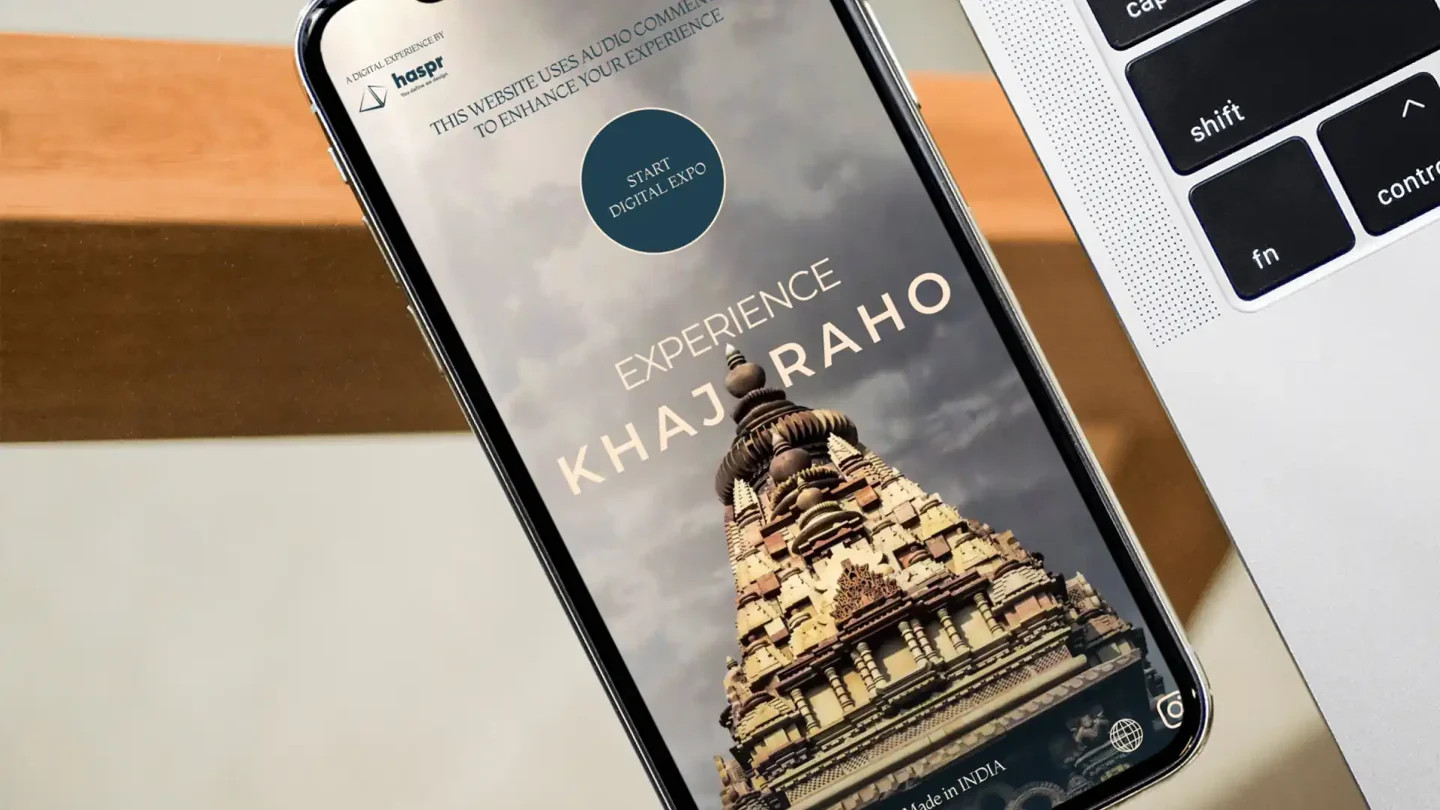
Khajuraho is a place of architectural scale and intricate detail. A browser experience needed to help visitors orient themselves and understand what they were seeing, beyond a collection of photographs.
The Haspr team visited the temples, photographed and filmed the structures, and gathered context. That work on the ground became material for the digital experience. My contribution was design and frontend engineering with the team.
More than one way to explore
The constraint was orientation at two scales: finding a temple and looking around it. We paired a map overview with panoramic exploration and a route back to the map. The original project screens show the resulting temple thumbnails and an in-tour Map control, making that relationship inspectable. On supported phones, gyroscope navigation connected device movement with the direction of the view.
The Haspr team’s original case record describes audio and visual content across ten languages. The project artwork shows language choice at entry, and the tour screen retains a Hindi selector above the view. Language, orientation and exploration belonged to one journey. Three.js and WebGL supported the browser graphics; device support determined whether orientation input was available.
The original tour and the portfolio film
The original project was a Haspr browser tour. Its published project screens are shown on this page, with team attribution. The illustrated temple sequence on the homepage is a later portfolio interpretation of that work.
The film’s painted scenes and television framing are not a screen recording of the original application. Its separate reading document explains the illustrated passage. Keeping the two distinct makes both the original contribution and the current presentation easier to assess.
What the evidence supports
The published project screens accompany the Haspr team’s fieldwork, mapped and panoramic exploration, ten-language content, and mobile gyroscope input. My contribution was design and frontend engineering with the team.
Source material & further reading