Reel OS
Find the story in the footage.
My role
Builder and editorial owner of a personal media-production system.
Project status
Private local workflow · editor interface prototype.
The idea behind the work.
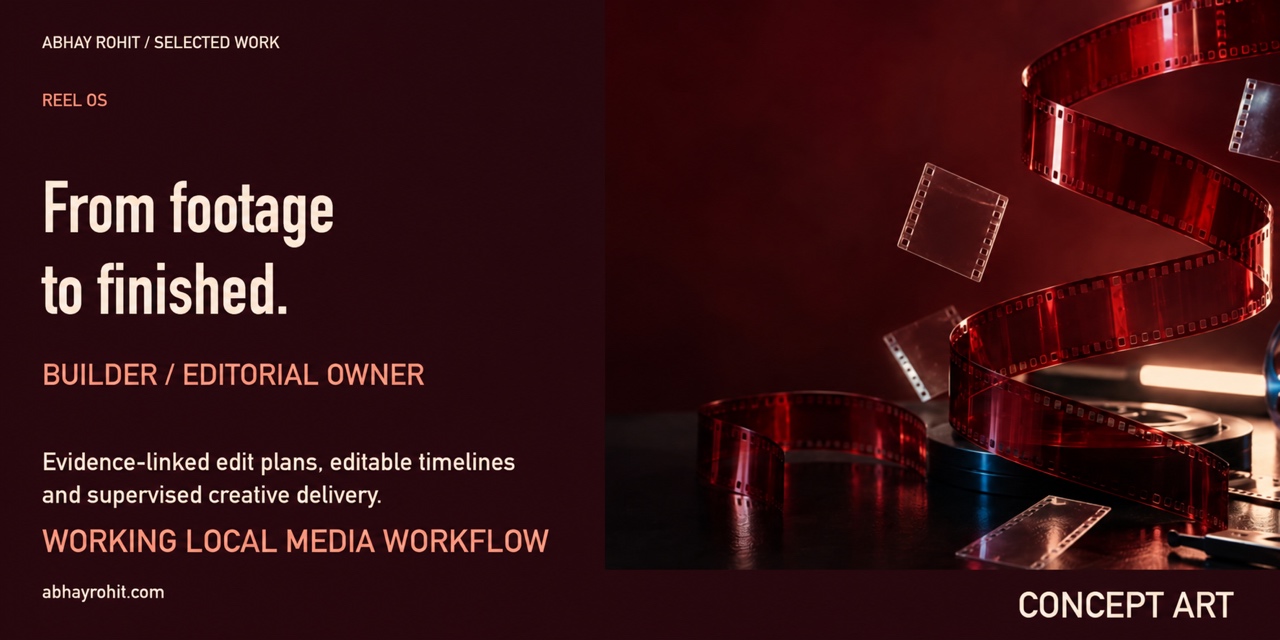
Reel OS turns the edit into something inspectable. Original footage is indexed, selected moments carry exact timecodes, and the editorial plan stays connected to the rendered master. The system produces editable timelines, proof sheets and technical QA so a later session can understand how the cut was made. A supervised phone-to-Mac route uses private Drive for source intake and review delivery. The important product choice is the separation of states: a technically sound render can still need a human verdict, and a published post’s performance must be measured in its own window. That gives the creative process durable records without pretending that a codec check proves a good film.
What I chose.
And why.
A good short-form edit depends on decisions about source identity, exact moments, pacing, typography and sound. Repeated chat-only editing loses those decisions and makes it difficult to explain or reproduce a result.
Keep original footage, source inventories and timestamped moment evidence connected to schema-validated edit plans.
Generate editable OTIO/EDL timelines and deterministic FFmpeg masters with plan-bound preflight and QA.
Keep technical delivery, normal-speed human review and platform performance as separate records.
Closer to the source.
Dates and capture context are preserved with the media.
What the work shows.
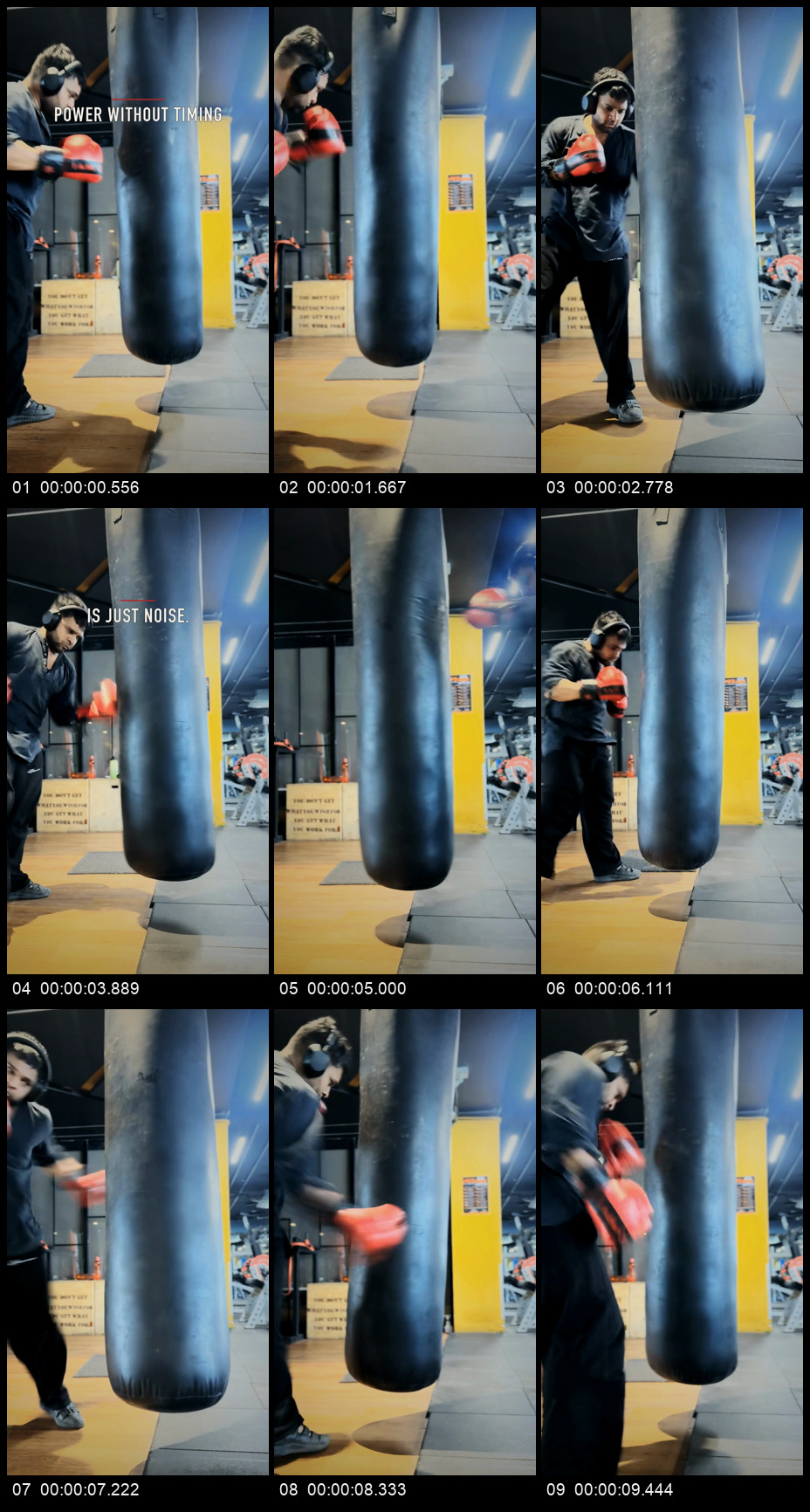
The repository documents a resumable pipeline, shared typography, checksum-bound QA and supervised private Drive intake/delivery. A dated eight-source cycle verified upload, cloud playback and checksum-identical return. The historical contact sheet shows an actual local rendered draft. No automatic analytics connection or performance lift is claimed.
Where I keep the distinction.
Technical QA checks the media file; it cannot decide whether the edit tells the right story. Human review stays part of every delivery. The BMW reel predates this workflow and is not presented as a Reel OS result. The editor interface shown on the homepage is a prototype.